
Hot tub startup chemicals
After you fill the tub, add hot tub startup chemicals like this: test, then alkalinity, pH, calcium, sanitizer and finally shock. Put each product in separately while the jets run, and wait to soak until chlorine hits 3 to 5 ppm.
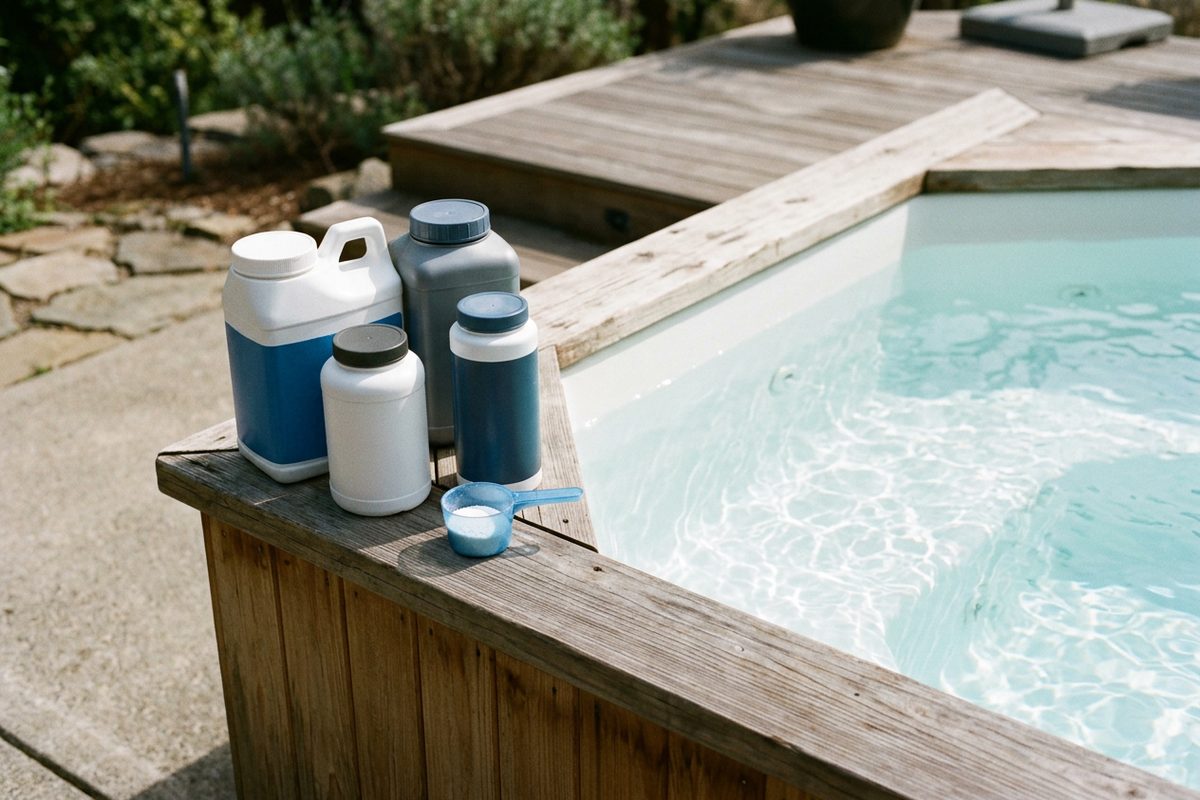
- Set total alkalinity first
- 80 to 120 ppm
- Set pH as the second step
- 7.4 to 7.6
- Calcium hardness level
- 150 to 250 ppm
- Startup shock with dichlor (28 g for 1,890 L)
- 1 oz per 500 gal
Steps before adding any chemical
Run cold tap water through the filter well when filling. The Hot Spring owner's manual says not to use hot water because it might trigger the heater safety cutout. It also excludes softened water, which may hurt the equipment. Stop filling when water sits about 1.5 inches (4 cm) over the highest jet.
Power up only after the tub is full. Next, run jets at high speed for 1 minute to clear out air. If this is a refill, check how to drain a hot tub before proceeding.
Hot tub chemicals explained for beginners
Leslie's guide for beginners places spa chemicals into three groups: balancers, sanitizers and shocks. Every tub requires these items, and the chemical calculator tells you how much to use for your gallons.
- Test strips give you sanitizer, pH, alkalinity and calcium from a single dip. Check the test strip guide.
- Sanitizer means chlorine or bromine, the daily chemical that kills germs. Your strip reads ppm, which means parts per million. Aim for 3 to 5 ppm of chlorine, or 4 to 6 ppm of bromine. Read more in bromine vs chlorine.
- Shock treatments use a larger dose, with or without chlorine, to destroy what sanitizers miss and break down old sanitizer plus body oils. The shock calculator tells you how much to use.
- pH up and pH down move the water's acidity toward 7.4 to 7.6. Leslie's points out that pH down also reduces alkalinity. See the guides on raising pH and lowering pH.
- Alkalinity increaser (sodium bicarbonate) keeps pH from swinging, with 80 to 120 ppm as the target. Learn how to raise alkalinity in a hot tub.
- Calcium hardness increaser (calcium chloride) lifts calcium into the 150 to 250 ppm range, because soft water can eat at the heater and metal parts.
Hot tub startup chemicals in order
| Step | What you set | Target | Product |
|---|---|---|---|
| 1 | Test the water | Read every pad | Test strips |
| 2 | Metals, only if needed | Well water or a metal stain problem | Metal sequestrant (stain and scale control) |
| 3 | Total alkalinity | 80 to 120 ppm | Alkalinity increaser (sodium bicarbonate); pH down to lower |
| 4 | pH | 7.4 to 7.6 | Soda ash handles pH up, while sodium bisulfate handles pH down. || Use soda ash for pH up or sodium bisulfate for pH down. || pH up needs soda ash; pH down needs sodium bisulfate. |
| 5 | Calcium hardness level | 150 to 250 ppm | Calcium hardness increaser (calcium chloride) |
| 6 | Sanitizer | Aim for chlorine at 3 to 5 ppm or bromine at 4 to 6 ppm. | Use dichlor granules, or combine sodium bromide with bromine tablets in a floater. |
| 7 | Shock | Dose on the label | Chlorine shock (dichlor), or non-chlorine shock for bromine |
This sequence for alkalinity, pH, and calcium comes from Frog. You start with alkalinity since it keeps pH stable. The metal step follows the American Whirlpool manual, which calls for a sequestering agent like Metal Gone when filling.
Don't add one dose straight after the last. Leslie's says 15 minutes of circulation works, American Whirlpool keeps the pump going 30 minutes, and Lay-Z-Spa waits for 2 hours. Follow the number in your own manual.
Adding each chemical
- Do a test. || Perform a test. || Run a test. Dip a strip to check pH, alkalinity, calcium, and sanitizer levels. Each pad is described in the test strip guide.
- If your water calls for it, treat the metals. If you have well water, add a sequestrant now. While a hose pre-filter traps rust and dirt, Hot Spring notes that dissolved copper and iron still get through.
- Adjust the alkalinity next. Add an increaser if the reading is under 80 ppm. Sodium bicarbonate moves alkalinity up: about 2.2 oz (64 g) per 1,000 gallons (3,785 litres) gives 10 ppm more, going by the CPO dose chart.
- Adjust the pH next. Aim for a level between 7.4 and 7.6. Get the exact amount for your gallons from the chemical calculator.
- Set the calcium level. Add calcium increaser if levels are below 150 ppm. You can raise 500 gallons by 10 ppm using 1 oz (28 g), per Leslie's chart. No chemical drops levels above 250 ppm, so add fresh water.
- Add the sanitizer. Use dichlor granules for chlorine systems. With bromine, the first addition is sodium bromide. The American Whirlpool manual puts it at 0.5 oz for every 100 gallons, which is 14 g per 380 litres. Next, place the floater.
- Add shock. The EPA-registered dichlor label lists a dose of 1 oz per 500 gallons. A tub of 350 gallons (1,320 litres) needs 0.7 oz (20 g). Shock turns bromide into active bromine when using bromine.
- Test again and wait. Keep the cover off while the shock vents; Lay-Z-Spa advises waiting 24 hours after shocking. Do not soak until chlorine returns to 3 to 5 ppm.
Each chemical goes into the water; never pour water into the chemical. Two chemicals should never be mixed. Keep gloves and eye protection on throughout the job.
Cloudy hot tub after you add chemicals?
A little haze just after dosing is normal. Water that clouds right after a shock generally clears in a few hours, says Leslie's. Run the jets, then wait before adding more. Each chemical goes in slowly, and the jet pump then runs on high for 10 minutes or more, says the Hot Spring manual.
Still cloudy once that's done? Here's what to check:
- pH or alkalinity is too high. A strong shock in water with high pH and alkalinity pushes minerals out as haze, says Leslie's. Use pH down to bring them down.
- Calcium is too high. Water clouds above 250 ppm. Frog states nothing removes it chemically, so add fresh water. Test again after adding small amounts of calcium increaser.
- The filter is not seated. Water slips past a cartridge not pushed fully home at both ends, says the Leslie's cloudy water guide.
- Using pool shock in a spa. Leslie's notes that pool shock nearly always clouds hot tub water. Pick a shock made for spas.
Is the water still hazy a day later? Follow the steps for cloudy hot tub water.
Chemicals for a refilled hot tub
When you refill, the chemicals and their order match a first start-up: test, metals if you need them, alkalinity, pH, calcium, then sanitizer and shock. Leslie's guide shocks each refill, killing anything in the fresh water.
For bromine, add sodium bromide once more. A bromine booster brings the bromide back after each drain, says the Leslie's chemical guide. Purge pipes of biofilm before draining again, then see how to drain a hot tub.
Differences among tub manufacturers
The numbers differ from brand to brand. Hot Spring wants alkalinity at 125 ppm and calcium at 150 ppm before it sets the pH. After that, its manual superchlorinates using 1.5 teaspoons of dichlor for each 250 gallons (950 litres).
American Whirlpool targets alkalinity between 130 and 160 ppm. It also advises heating water before adding chemicals, whereas Hot Spring balances first and heats later. Lay-Z-Spa's inflatable tubs require a pH between 7.2 and 7.6. If your manual gives a number, use that.
Swim spa chemicals
Swim spas use the same chemistry as hot tubs. Targets, order, and products stay the same. One water care section in the American Whirlpool manual handles both swim spas and spas.
Doses are the only thing that changes. Swim spa chemicals are measured per gallon, so adjust each dose for your own volume. Look at Jacuzzi's swim spas: capacity runs from 1,345 up to 2,013 gallons (roughly 5,090 to 7,620 litres) between the J-12 and the J-16. For 1,500 gallons you need 3 oz (85 g) if using dichlor at 1 oz per 500 gallons. Your spec sheet lists the volume, or you can work out your gallons.
You will need to wait longer. Hydropool says heating a refilled swim spa takes 12 to 24 hours because of the larger water volume.
What to get before filling
- Get test strips that match your sanitizer.
- Alkalinity increaser along with pH up and pH down.
- You will need calcium hardness increaser.
- Choose dichlor granules, or get sodium bromide with bromine tablets and a floater.
- Pick either chlorine shock or non-chlorine shock.
- Use a metal sequestrant if your supply comes from a well.
- Clear biofilm at your next drain with a line cleaner.
Common questions
Which chemicals are required to start up a hot tub?
You need test strips, alkalinity increaser, pH up and down, calcium increaser, sanitizer, and shock. Add a metal sequestrant if you use well water. If you use bromine, add sodium bromide too.
What is the order to add chemicals to a new hot tub?
Start with alkalinity, follow with pH, then handle calcium. Once the water is balanced, add sanitizer and shock last. Run a test between each step.
Is a hot tub shocked after filling?
The answer is yes. A shock at each fresh fill is Lay-Z-Spa's rule, to clear any bacteria or dirt that's in the new water. Keep the cover off during venting.
How long must I wait after adding chemicals to use my hot tub?
Do not use the tub until all levels are correct and chlorine sits between 3 and 5 ppm. No one should soak until 24 hours pass after a startup shock, says Lay-Z-Spa.
Is calcium required for a brand new tub?
Yes, if your tap water tests below 150 ppm. Soft water may corrode metal parts and the heater, which Frog notes is permanent damage.