
Hot tub water green
When the water turns green and the walls feel slimy, algae is the cause. Balance the water, then shock it with chlorine. When the water is clear, bright green with no slime, copper is the cause, and it calls for a metal remover instead.
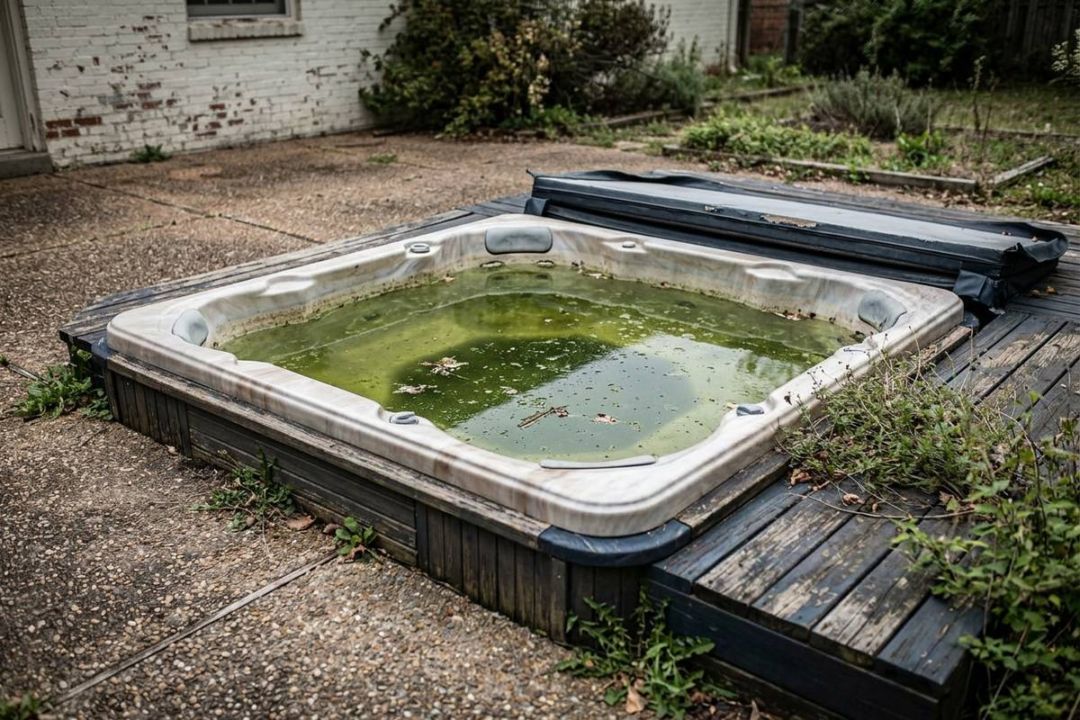
- Slimy walls with green water
- Algae
- No slime, just bright clear green
- Copper
- Target free chlorine level after treatment
- 3 to 5 ppm
- Dichlor shock dose (28 g for 1,890 L)
- 1 oz per 500 gal
Why is my hot tub water green or brown?
Use your hand to start. Put your hand on the shell under the water line. Algae is what slime means; walls that feel smooth suggest metal in the water. Other things cause yellow water, and the yellow water page covers them.
| Color | Cause | How to tell | Fix |
|---|---|---|---|
| Green | Algae | Look for dull green color, slimy walls, a dirty filter, or low sanitizer. | Balance, shock with chlorine, then a new filter |
| Green | Copper | No slime, just bright clear green | Metal remover (sequestrant) |
| Brown | Iron oxide | Look for tea color within hours of shocking or a big pH change. | New filter, then a metal remover |
| Brown | Dirty fill water | Brown right after filling | Pre-filter on the hose at the next fill |
These rows match the Leslie's water color guide. Green or brown stains on the shell can come from high iron or copper, which the Hot Spring owner's manual also says.
Steps to treat green algae water
- Run a test on the water. Use test strips to check alkalinity and pH. Hot Spring identifies low sanitizer and high pH as the two causes of algae.
- Balance the chemistry first. Adjust alkalinity to 80 to 120 ppm, then set pH to 7.4 to 7.6. Use the chemical calculator to get the dose for your tub.
- Clean the filter by rinsing it. Leslie's identifies a dirty filter as a source of algae.
- Apply a chlorine shock treatment. The EPA-registered dichlor label specifies 1 oz per 500 gallons. You need 0.7 oz (20 g) for a 350 gallon (1,320 litre) tub. The shock calculator calculates the amount for you.
- Open the cover and run the jets. Circulate the water for several hours so the filter traps dead algae.
- Test the water again tomorrow. Shock it again if chlorine drops to 0 ppm by then. Keep repeating this until the level stays steady.
- Install a fresh filter cartridge. Leslie's recommends a new one after filtering out the dead algae.
- Only get in when the level is under 5 ppm. Let the free chlorine return to 3 to 5 ppm first.
Put in chemicals one by one while the jets run. Do not mix any chemicals together in a bucket or cup.
Green water that is clear: copper, not algae
Copper makes water green but keeps it clear. A swimmer's hair turns green from this same metal. Leslie's lists four ways it gets in. Two sources are copper pipes and your fill water. A copper heat exchanger in a gas heater is the third source. Last is copper pool algaecide, which never belongs in a spa.
Shocking the water will not fix this. Add a metal remover like Metal Gon or Spa Metal Free and follow the label for your gallons. Each time you fill the tub, the American Whirlpool manual says to add a sequestering agent.
You should also check alkalinity and pH. Hot Spring links stains to metal in the fill water and to both levels running low. While a hose pre-filter catches dirt, Hot Spring notes it won't remove dissolved iron or copper.
Causes specific to yellow water
Pollen, yellow algae, or well water iron usually cause yellow, and each needs a different fix. Tell them apart by reading hot tub water yellow.
Hot tub water brown after shock or a refill
Tea-colored water usually means iron oxide. A shock or a big pH change can cause it to appear within hours, per Leslie's. Some of it goes away with a new filter cartridge. A sequestering agent makes the rest clear faster by holding iron in the water to stop it from coloring the water.
The supply is likely the cause if brown water appears right after a refill. Some town water carries more grit during dry, hot spells. Attach a pre-filter to your garden hose before the next fill. If you need to start again, read how to drain a hot tub.
When should you drain instead?
Once the shock has done its work on a yellow algae bloom, drain the tub. You need to drain too when algae keeps coming back after a fix.
Treating heavily dirty water with 8 to 10 ppm of chlorine is possible, the American Whirlpool manual notes. The more practical way, that manual says, is to drain and refill. A firm sign comes from Jacuzzi: with dissolved solids past 1,500 ppm, drain the tub.
Purge the lines before draining to let slime in the pipes leave with the old water.
Ways to keep the water clear
- As Lay-Z-Spa advises, keep free chlorine between 3 and 5 ppm and test before each soak.
- Maintain your pH at 7.4 to 7.6. High pH can cause algae, according to Hot Spring.
- After busy soaks, and about once a week, give the tub a shock.
- Every week, rinse the filter. Algae can grow if the filter is dirty.
- Leave the cover on to block dirt and pollen.
- If you have well water, use a hose pre-filter and add metal remover every time you fill up.
- When blooms keep coming back, Leslie's advises trying a non-metallic algaecide. Do not ever use a copper one.
Common questions
Can you safely use a hot tub that is green?
No. Since algae means the sanitizer has run low, germs can grow as well. Shock the water and wait until free chlorine reaches 3 to 5 ppm before entering.
What caused my hot tub to turn green after filling?
Clear green water right after filling usually means copper from your pipes or water supply. Put in a metal remover, and install a pre-filter on your hose for next time.
Does shock treatment clear green hot tub water?
Shock clears algae when pH is balanced and the filter is clean. You need a metal remover for copper because shock treatment will not fix it.
Can pool algaecide go in a hot tub?
Not one with copper, since copper turns spa water green. A non-metallic algaecide made for spas is what Leslie's suggests if algae keeps returning.